

There is a word I hear often in my professional world and in the corporate world more broadly: resilience.
It gets used a lot. Sometimes too easily.
Companies build plans, hold meetings, create playbooks, run tabletops, and then speak as if resilience has already been achieved. Planning matters. Preparation matters. Discipline matters. I believe that deeply. But planning is not resilience. At best, planning is a vote in favor of resilience. It is a necessary beginning, not the thing itself.
Resilience is earned. Hard-earned, in fact.
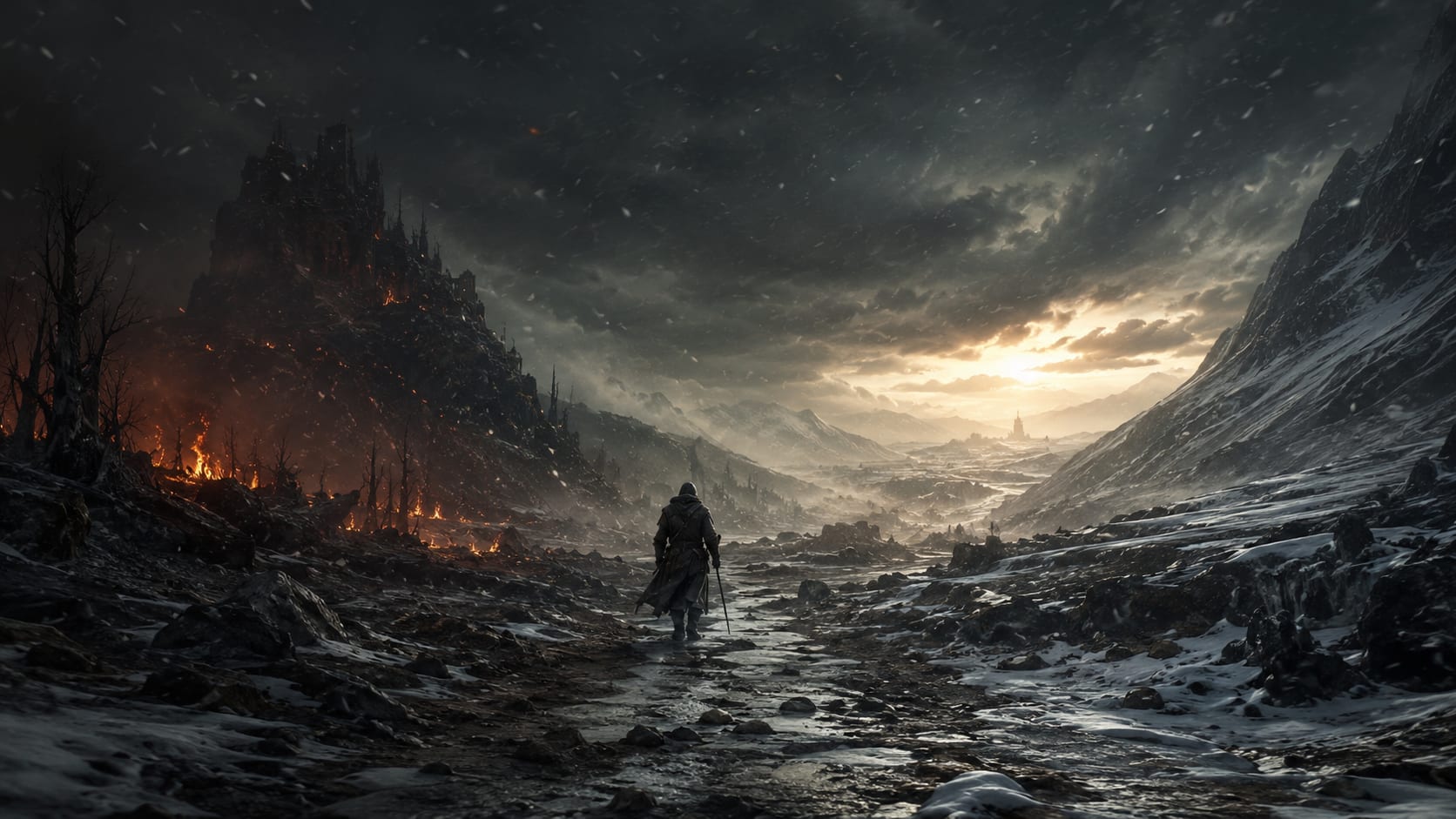
It is earned when the plan meets reality and reality hits back. It is earned when the moment turns hot, uncertain, painful, humiliating, dangerous, or costly, and someone keeps going anyway. It is earned in the long walk through the cold, in the fire, in the fracture, in the blood, sweat, and tears. It is what remains after the test, not what exists before it.
That idea has been sitting with me as I continue working on Touch of the Eternal.
Right now, several of my central characters are being tested in exactly that way.
Samien is not walking an easy road. He is wounded, hunted by his own past, burdened by what he has done and what may be awakening inside him, and still he keeps moving. He is not polished. He is not safe. He is not “ready” in the way modern people like to imagine readiness. But he endures, and endurance under strain is where real resilience begins.
Fahrenweh is being tested differently. She is pulled between sword and spirit, training and calling, duty and instinct. She is frustrated, divided, and not yet whole in her own understanding of herself. Then the world stops being theoretical and becomes catastrophic. She does not get the luxury of becoming strong in comfort. She has to become strong while things are breaking around her.
And then there is Riegend, who is becoming something terrible. His path is a reminder that suffering does not automatically make a person noble. Fire reveals, but it also distorts. Trial can forge a man into something stronger, or it can hollow him out and turn him into an instrument of ruin. That matters to me too, because “resilience” without moral center can become something monstrous.
That, to me, is closer to the truth.
The people we admire most for grit, determination, fortitude, steadiness, courage, and endurance did not receive those things as decorative traits. They earned them. Usually the earning was painful. Usually it came at a cost. Usually there was a stretch where no one would have called the process admirable at all. It just looked like struggle.
I think that is true for people. I think it is true for families. I think it is true for leaders. I think it is true for organizations. And I think it is true for the characters I am writing.
Resilience is not a slogan. It is not a slide. It is not a self-awarded label.
It is what is proven when the storm arrives.
And in this story, the storm is here.
Until next time,
J. James Adler